Annona muricata Growing Guide: Care, Propagation & Fruiting
Introduction
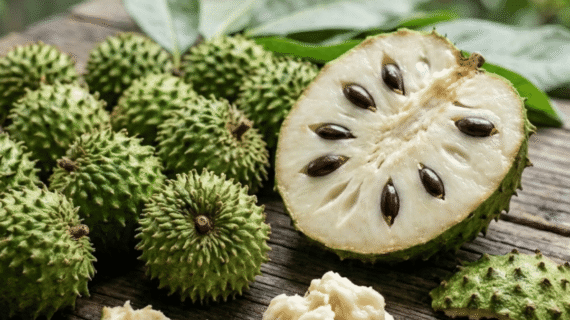
Annona muricata, commonly known as soursop, guanábana, or graviola, is a small evergreen tropical fruit tree in the family Annonaceae. Renowned for its large, spiny green fruits and fragrant, creamy white flesh, soursop is cultivated throughout the tropics for fresh consumption, beverages, desserts, and processed products. Its flavor is uniquely complex, combining sweet and tangy notes often compared to pineapple, strawberry, banana, and citrus.
Native to the tropical Americas, Annona muricata has become an important fruit crop across Asia, Africa, Oceania, and the Caribbean. The tree is admired not only for its highly aromatic fruit but also for its glossy evergreen foliage, attractive flowers, and relatively compact growth habit, making it well suited to home gardens and specialty fruit collections. Numerous regional selections differ in fruit size, sweetness, acidity, fiber content, and seed count.
Native Habitat
Distribution
Annona muricata is native to the Caribbean, Central America, and northern South America. It has since become widely naturalized and cultivated throughout tropical regions.
Major cultivation areas include:
- Brazil
- Colombia
- Venezuela
- Mexico
- Costa Rica
- Philippines
- Indonesia
- Malaysia
- Thailand
- Sri Lanka
- India
- Australia
Climate
Soursop thrives in warm, humid tropical climates with consistently high temperatures throughout the year.
| Environmental Factor | Preferred Condition |
|---|---|
| USDA Zones | 10b–12 |
| Temperature | 24–32°C (75–90°F) |
| Annual Rainfall | 1,200–2,500 mm |
| Humidity | Moderate to high |
| Dry Season | Beneficial but not essential |
The species is highly sensitive to frost and performs best where temperatures remain above 15°C (59°F) year-round.
Growth & Care
Proper Annona muricata care promotes vigorous growth, regular flowering, and abundant fruit production.
Light
Plant soursop in full sun, providing at least 6–8 hours of direct sunlight each day.
Full sun encourages stronger branching, increased flowering, improved fruit size, and higher sugar accumulation. Young trees tolerate light afternoon shade in particularly hot climates.
Temperature
Maintain temperatures between 24–32°C (75–90°F).
Growth slows significantly below 18°C (64°F), while frost can severely damage or kill the tree. Therefore, cultivation is best suited to frost-free tropical and warm subtropical regions.
Soil
Soursop grows best in fertile, well-drained soils rich in organic matter.
Ideal soil characteristics include:
- Sandy loam or loam
- Excellent drainage
- High organic content
- Slightly acidic pH (5.5–6.8)
Avoid heavy, poorly drained soils because waterlogging increases the risk of root diseases.
Watering
Maintain evenly moist soil, particularly during flowering and fruit development.
Young trees require frequent irrigation while establishing a strong root system. Mature trees tolerate short dry periods but produce larger, higher-quality fruit when soil moisture remains consistent.
Avoid prolonged saturated conditions that may damage roots.
Fertilization
Feed trees with balanced fertilizer throughout the growing season.
Recommended nutrients include:
- Nitrogen for healthy canopy development
- Phosphorus for vigorous root growth
- Potassium for flowering, fruit size, and sweetness
- Calcium, magnesium, zinc, boron, and iron when deficiencies occur
Excessive nitrogen should be avoided because it encourages vegetative growth at the expense of flowering.
Mulching
Apply a 5–10 cm layer of organic mulch beneath the canopy while leaving several centimeters around the trunk uncovered.
Mulching helps:
- Retain soil moisture
- Suppress weeds
- Moderate root-zone temperature
- Improve soil structure
- Increase organic matter over time
Pruning
Prune after harvest or during periods of active growth.
Focus on:
- Removing dead or damaged branches
- Improving air circulation
- Maintaining a balanced canopy
- Controlling tree height for easier harvesting
Moderate pruning also encourages new flowering shoots and simplifies orchard management.
Propagation
Understanding Annona muricata propagation allows growers to choose planting material suited to their production goals.
Seed Propagation
Fresh seeds germinate readily and produce vigorous seedlings, although offspring may vary in fruit quality.
For successful germination:
- Remove seeds from fully ripe fruit.
- Wash away all adhering pulp.
- Soak seeds in warm water for 24 hours.
- Sow in a sterile, well-drained growing medium.
- Plant approximately 2 cm deep.
- Maintain temperatures between 25–30°C.
- Keep the medium consistently moist.
Fresh seeds generally germinate within 3–6 weeks.
Grafting
Superior cultivars are often propagated through grafting to preserve desirable fruit characteristics and reduce the juvenile period.
Common methods include:
- Veneer grafting
- Cleft grafting
- Side veneer grafting
Step-by-Step Grafting Process
- Select a vigorous seedling rootstock.
- Collect healthy scion wood from a productive tree.
- Make clean, matching cuts on the stock and scion.
- Carefully align the cambium layers.
- Secure the graft tightly using grafting tape.
- Protect the union from excessive sunlight and dehydration.
- Wait for new growth before removing the wrapping.
- Remove any shoots emerging below the graft union.
Warm temperatures and high humidity improve graft success considerably.
Grafted vs. Seed-Grown Plants
| Characteristic | Grafted Plants | Seed-Grown Plants |
|---|---|---|
| Fruiting Age | 2–3 years | 3–5 years |
| Growth Rate | Moderate | Vigorous |
| Fruit Quality | Consistent | Variable |
| Genetic Uniformity | Excellent | Low |
| Commercial Value | Very high | Moderate |
| Best Use | Orchards, collectors | Breeding, rootstocks |
Grafted trees are recommended for growers seeking earlier fruit production and reliable fruit quality.
Seed-grown plants remain valuable for breeding programs, rootstock production, and selecting superior new cultivars.
Fruiting
Healthy soursop trees may flower and fruit several times annually in consistently warm tropical climates.
Flowering
Fragrant yellow-green flowers emerge singly or in small groups on branches and older wood. The species exhibits protogynous flowering, where female and male stages occur at different times, helping to encourage cross-pollination.
Pollination
Small beetles are the primary natural pollinators. In commercial orchards, hand pollination is frequently practiced to improve fruit set, increase fruit size, and produce more symmetrical fruits.
Fruit Development
Following successful pollination, fruits generally require 4–6 months to mature.
Proper irrigation and balanced fertilization during development improve:
- Fruit size
- Flesh quality
- Sweetness
- Aroma
- Overall yield
Harvest Maturity
Harvest fruit when:
- The glossy green skin becomes slightly dull.
- The spines become softer and more widely spaced.
- The fruit yields slightly to gentle pressure.
- The characteristic aroma begins to develop.
Soursop continues to soften after harvest and should be consumed shortly after reaching full ripeness because of its relatively short shelf life.
Factors Affecting Fruit Quality
Premium soursop production depends on:
- Full sun exposure
- Fertile, well-drained soil
- Consistent irrigation
- Balanced fertilization
- Effective pollination
- Proper pruning
- Timely harvesting
- Selection of superior cultivars
When these conditions are carefully maintained, Annona muricata produces abundant crops of large, aromatic fruits with creamy, juicy flesh that is highly valued for both fresh consumption and culinary applications.
Need Further Cultivation Guidance?
Whether you need assistance with rare tropical plant care, future species reservations, grafted plant availability, or cultivation guidance for rare seeds and rare fruit plants, our team is always happy to assist fellow collectors.