Durio zibethinus Growing Guide: Care, Propagation & Fruiting
Introduction
Durio zibethinus, commonly known as durian, is an evergreen tropical fruit tree in the family Malvaceae. Native to Southeast Asia, it is the most economically important species of the genus Durio and serves as the genetic foundation for hundreds of cultivated varieties. Collectors and growers value this species for its remarkable fruit diversity, vigorous growth, and long productive lifespan. Whether cultivated in home gardens or commercial orchards, healthy trees can produce fruit for decades under favorable conditions.
Native Habitat
Durio zibethinus naturally occurs in lowland tropical rainforests of Malaysia, Indonesia, Brunei, and southern Thailand. It thrives in warm, humid climates with abundant rainfall and deep, well-drained soils rich in organic matter. Consequently, it performs best where temperatures remain consistently warm throughout the year.
| Growing Factor | Ideal Condition |
|---|---|
| Temperature | 24–32°C (75–90°F) |
| Rainfall | 1,800–3,500 mm annually |
| Soil pH | 5.5–6.5 |
| Sunlight | Full sun (young trees benefit from light shade) |
Botanical Description
Durio zibethinus develops into a large evergreen tree that may exceed 30 meters in natural forests but is usually maintained at 8–15 meters in cultivation through pruning.
Key characteristics include:
- Straight trunk with gray to brown bark.
- Leathery, glossy green leaves with distinctive golden- or silver-scaled undersides.
- Creamy white flowers produced directly on mature branches and trunks (cauliflory).
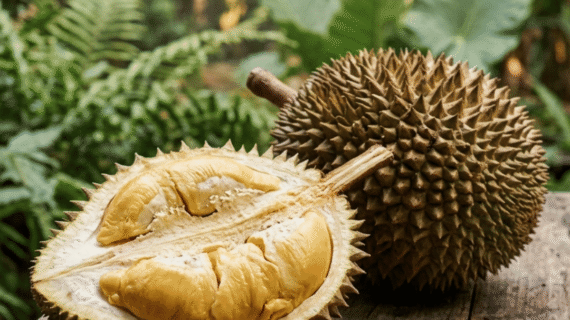
- Large, spiny fruits containing several seeds surrounded by rich, custard-like arils.
- Deep taproot supported by extensive lateral feeder roots that require excellent drainage.
These adaptations allow the species to compete successfully within humid tropical forests while supporting heavy annual fruit production.
Growth & Care
Light
Provide full sun for mature trees. However, protect young seedlings with 30–50% shade during their first one to two years to reduce heat stress.
Temperature
Maintain temperatures above 20°C whenever possible. Cold conditions slow growth, while frost can permanently damage foliage and young stems.
Soil
Plant in deep, fertile, well-drained soil with abundant organic matter. Avoid heavy clay that remains saturated after rainfall because oxygen-deficient soil encourages root diseases.
Watering
Keep soil consistently moist without allowing standing water. Although mature trees tolerate brief dry periods, prolonged drought reduces flowering and increases fruit drop.
Fertilization
Apply balanced fertilizer during vegetative growth. As trees mature, increase phosphorus and potassium to encourage flowering, fruit set, and fruit quality. Additionally, compost and mulch improve soil biology and nutrient availability.
Mulching
Spread organic mulch beneath the canopy while leaving space around the trunk. Mulch conserves moisture, suppresses weeds, and gradually enriches the soil.
Pruning
Remove dead, diseased, or crossing branches after harvest. Regular pruning improves light penetration, airflow, and canopy structure while making harvesting safer.
Propagation
Durian may be propagated by seed, although seedlings vary genetically and require many years before fruiting.
Seed Propagation
- Sow fresh seeds immediately after extraction.
- Plant horizontally in moist, well-drained media.
- Maintain warm temperatures and high humidity.
- Germination usually occurs within 1–3 weeks.
Grafting
Commercial growers prefer grafting because it preserves superior cultivars.
Basic steps include:
- Select a healthy seedling rootstock.
- Choose mature, disease-free scion wood from a productive tree.
- Perform cleft or side veneer grafting.
- Wrap the union securely.
- Keep the graft shaded and humid until new growth appears.
Successful grafts combine vigorous roots with predictable fruit quality and earlier production.
Grafted vs. Seed-Grown Trees
| Characteristic | Grafted | Seed-grown |
|---|---|---|
| Fruiting age | 3–6 years | 8–15 years |
| Growth rate | Moderate | Vigorous |
| Fruit quality | Predictable | Variable |
| Commercial value | High | Moderate |
Choose grafted trees when consistent fruit quality and early harvest are priorities. Conversely, seedlings remain valuable for breeding programs, rootstock production, and conservation.
Fruiting
Healthy grafted trees often flower within several years, whereas seedlings require a much longer juvenile period. Most flowers open at night and depend primarily on bats and other nocturnal pollinators.
Following successful pollination, fruits generally mature over several months. Harvest when the fruit reaches full size, develops its characteristic aroma, and naturally begins to detach from the stem. Balanced nutrition, stable moisture, and adequate sunlight improve flesh development, flavor, and yield.
Need Further Cultivation Guidance?
Whether you need assistance with rare tropical plant care, future species reservations, grafted plant availability, or cultivation guidance for rare seeds and rare fruit plants, our team is always happy to assist fellow collectors.