Theobroma cacao Growing Guide: Care, Propagation & Fruiting
Introduction
Theobroma cacao, commonly known as the cacao or cocoa tree, is a small evergreen tropical tree in the family Malvaceae. Revered as the source of cocoa beans—the primary ingredient in chocolate—it is one of the world’s most economically and culturally significant fruit species. The genus name Theobroma, meaning “food of the gods,” reflects the tree’s long history of cultivation and its enduring importance in human civilization.
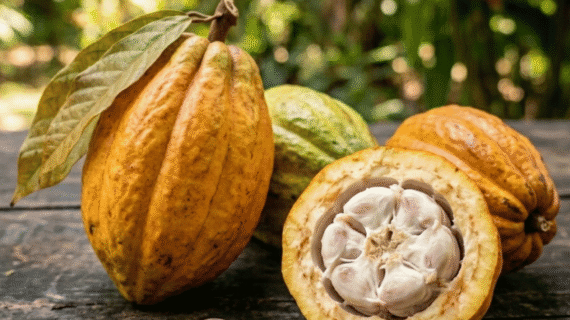
Native to the humid rainforests of the Amazon Basin, Theobroma cacao thrives in warm, shaded environments with consistently high humidity. Mature trees produce colorful, ribbed pods directly from the trunk and older branches through a phenomenon known as cauliflory. Each pod contains 20–60 seeds embedded in a sweet, mucilaginous pulp, with the seeds undergoing fermentation and drying before being processed into cocoa products.
Collectors value cacao not only for its ornamental appearance and fascinating growth habit but also for the diversity of cultivars, pod colors, and flavor profiles. Modern breeding programs have produced numerous selections with improved productivity, disease resistance, and fine-flavor characteristics.
Native Habitat
Distribution
Theobroma cacao originated in the upper Amazon Basin, spanning parts of present-day Peru, Ecuador, Colombia, Brazil, and Bolivia. From there, it spread throughout Central America before becoming a globally cultivated crop.
Major production regions include:
- Côte d’Ivoire
- Ghana
- Ecuador
- Brazil
- Peru
- Indonesia
- Malaysia
- Nigeria
- Cameroon
- Dominican Republic
Climate
Cacao thrives in humid tropical climates with minimal seasonal temperature variation.
| Environmental Factor | Preferred Condition |
|---|---|
| USDA Zones | 11–12 |
| Temperature | 22–30°C (72–86°F) |
| Annual Rainfall | 1,500–3,000 mm |
| Humidity | 70–100% |
| Shade | Partial shade, especially when young |
Unlike many tropical fruit trees, cacao naturally grows beneath the rainforest canopy. Consequently, young trees require protection from intense sunlight until they become well established.
Growth & Care
Proper Theobroma cacao care focuses on maintaining consistent warmth, moisture, and humidity while protecting the tree from environmental stress.
Light
Young cacao trees perform best under 30–50% filtered shade, while mature trees tolerate more sunlight once their canopy has developed.
Partial shade reduces heat stress, minimizes leaf scorch, and more closely replicates the species’ natural forest habitat.
Temperature
Maintain temperatures between 22–30°C (72–86°F) throughout the year.
Growth slows considerably below 18°C (64°F), and frost is generally fatal. Therefore, cacao should only be cultivated outdoors in frost-free climates or in controlled greenhouse environments.
Soil
Cacao requires fertile, well-drained soils rich in organic matter.
Ideal conditions include:
- Deep loam or clay loam
- Excellent drainage
- High organic content
- Slightly acidic pH (5.5–7.0)
Although the tree prefers moist soil, prolonged waterlogging can lead to root decline and fungal diseases.
Watering
Maintain consistently moist soil without allowing it to become saturated.
Young trees require frequent irrigation, particularly during dry periods. Mature trees also benefit from regular watering because drought stress can reduce flowering, fruit set, and bean quality.
Fertilization
Apply balanced fertilizer several times throughout the growing season.
Key nutrients include:
- Nitrogen for canopy development
- Phosphorus for healthy root growth
- Potassium to improve pod development and bean quality
- Calcium, magnesium, sulfur, zinc, and boron as needed
Regular additions of compost or well-decomposed organic matter further enhance soil fertility and microbial activity.
Mulching
Spread a 5–10 cm layer of organic mulch beneath the canopy while keeping it away from the trunk.
Mulching:
- Conserves soil moisture
- Suppresses weeds
- Moderates soil temperature
- Improves soil structure
- Gradually increases organic matter
Pruning
Prune annually to maintain a balanced canopy and encourage productive branching.
Remove:
- Dead or diseased branches
- Water shoots
- Crossing limbs
- Excessive vertical growth
Proper pruning improves airflow, facilitates harvesting, and promotes healthy flower and pod production.
Propagation
Understanding Theobroma cacao propagation allows growers to choose planting material that best suits their objectives.
Seed Propagation
Fresh cacao seeds germinate rapidly but lose viability within days if allowed to dry.
For successful germination:
- Remove seeds from a freshly harvested pod.
- Gently wash away excess pulp.
- Sow immediately in a well-drained growing medium.
- Plant approximately 2–3 cm deep.
- Maintain temperatures between 25–30°C.
- Keep the medium consistently moist.
Fresh seeds usually germinate within 7–21 days.
Seed-grown plants display genetic variability and are commonly used in breeding programs or as rootstocks.
Grafting
Commercial nurseries frequently graft elite cultivars to preserve superior yield, disease resistance, and bean quality.
Common methods include:
- Side veneer grafting
- Cleft grafting
- Patch budding
Step-by-Step Grafting Process
- Select a healthy seedling rootstock.
- Collect mature scion wood from a productive tree.
- Make clean, matching cuts on the stock and scion.
- Align the cambium layers carefully.
- Secure the graft tightly with grafting tape.
- Protect the graft from direct sunlight and excessive moisture loss.
- Maintain high humidity until new growth appears.
- Remove wrapping once the graft union has healed and eliminate shoots below the graft.
Grafting is most successful during periods of active growth under warm, humid conditions.
Grafted vs. Seed-Grown Plants
| Characteristic | Grafted Plants | Seed-Grown Plants |
|---|---|---|
| Fruiting Age | 2–3 years | 3–5 years |
| Growth Rate | Moderate | Vigorous |
| Bean Quality | Consistent | Variable |
| Genetic Uniformity | Excellent | Low |
| Commercial Value | Very high | Moderate |
| Best Use | Plantations, collectors | Breeding, rootstocks |
Grafted trees are preferred for commercial production because they produce uniform pods with predictable bean quality and begin fruiting earlier.
Seed-grown trees remain valuable for breeding programs, genetic conservation, and rootstock development.
Fruiting
Unlike many fruit trees, cacao flowers and fruits directly on its trunk and mature branches throughout much of the year in suitable climates.
Flowering
Small, star-shaped flowers emerge in clusters from specialized cushions on the trunk and older branches. Mature trees may produce thousands of flowers annually, although only a small percentage develop into pods.
Pollination
Tiny midges (Forcipomyia spp.) are the primary natural pollinators. Because these insects require humid, organic-rich environments, maintaining mulch and leaf litter beneath the trees helps support healthy pollinator populations.
Fruit Development
Following successful pollination, pods generally require 5–6 months to reach maturity.
Consistent irrigation, balanced fertilization, and healthy foliage contribute to:
- Larger pods
- Better bean development
- Improved flavor potential
- Reduced cherelle wilt (young pod abortion)
Harvest Maturity
Harvest pods when:
- The pod changes to its mature color, depending on the cultivar (yellow, orange, or red).
- The rind develops a dull rather than glossy appearance.
- Seeds inside are fully developed.
- Pods produce a hollow sound when tapped lightly.
Pods should be harvested carefully using pruning tools to avoid damaging the flower cushions that produce future crops.
Factors Affecting Bean Quality
Premium cacao production depends on:
- Partial shade during early growth
- Warm, humid conditions
- Fertile, well-drained soil
- Consistent irrigation
- Balanced nutrition
- Effective pollination
- Proper pruning
- Careful harvesting
- Correct postharvest fermentation and drying
When these conditions are combined with careful postharvest handling, Theobroma cacao produces high-quality cocoa beans capable of developing the complex flavors and aromas sought by fine chocolate makers worldwide.
Need Further Cultivation Guidance?
Whether you need assistance with rare tropical plant care, future species reservations, grafted plant availability, or cultivation guidance for rare seeds and rare fruit plants, our team is always happy to assist fellow collectors.