Salacca zalacca Growing Guide: Care, Propagation & Fruiting
Introduction
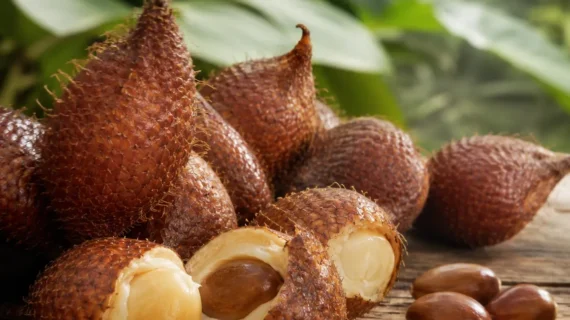
Salacca zalacca, commonly known as snake fruit or salak, is a clustering, evergreen palm in the family Arecaceae. Native to Indonesia, it is renowned for its distinctive reddish-brown, scaly skin that resembles snakeskin and its crisp, aromatic flesh, which varies from sweet and honey-like to pleasantly acidic depending on the cultivar. The species is among Southeast Asia’s most important tropical fruit palms and has produced numerous regional cultivars prized for their exceptional flavor, texture, and productivity.
Unlike solitary palms, Salacca zalacca forms dense clumps of multiple stems arising from underground suckers. The stems remain largely hidden beneath a crown of long, pinnate leaves armed with formidable black spines. Mature plants produce compact clusters of fruits at the base of the crown, making harvesting relatively convenient. Popular cultivars such as ‘Pondoh’, ‘Bali’, and ‘Gula Pasir’ are highly valued by collectors and commercial growers alike for their outstanding fruit quality.
Native Habitat
Distribution
Salacca zalacca is native to the Indonesian islands of Java and Sumatra. Through cultivation, it has spread throughout tropical Southeast Asia and other equatorial regions.
Major cultivation areas include:
- Indonesia
- Thailand
- Malaysia
- Brunei
- Philippines
- Papua New Guinea
Indonesia remains the center of cultivar diversity, with hundreds of locally adapted selections grown across different islands.
Climate
Snake fruit thrives in warm, humid tropical environments with abundant rainfall and consistently high humidity.
| Environmental Factor | Preferred Condition |
|---|---|
| USDA Zones | 11–12 |
| Temperature | 22–32°C (72–90°F) |
| Annual Rainfall | 1,500–3,500 mm |
| Humidity | High (70–100%) |
| Shade | Partial shade to filtered sun |
Unlike many fruit trees, Salacca zalacca naturally grows as an understory palm and performs best under filtered sunlight, especially during its juvenile stage.
Growth & Care
Proper Salacca zalacca care focuses on maintaining consistent moisture, high humidity, and fertile soil while protecting plants from excessive sunlight.
Light
Provide 40–60% filtered sunlight or light shade.
Young palms are susceptible to leaf scorch under intense afternoon sun. Mature plants tolerate brighter conditions if irrigation remains adequate, but partial shade generally produces healthier foliage and improved fruit quality.
Temperature
Maintain temperatures between 22–32°C (72–90°F).
Growth slows below 18°C (64°F), and frost is fatal. Consequently, snake fruit should only be cultivated outdoors in frost-free tropical climates.
Soil
Grow salak in fertile, moisture-retentive yet well-drained soil.
Ideal soil conditions include:
- Loam or sandy loam
- High organic matter
- Excellent drainage
- Slightly acidic pH (5.5–6.8)
Heavy clay soils should be amended to improve drainage and root aeration.
Watering
Maintain consistently moist soil throughout the year.
Young plants require frequent irrigation until well established. Mature clumps also benefit from regular watering, particularly during flowering and fruit development. Although short dry periods are tolerated, prolonged drought reduces fruit size and overall productivity.
Avoid standing water around the root zone.
Fertilization
Apply balanced fertilizer several times during the growing season.
Essential nutrients include:
- Nitrogen for vigorous leaf production
- Phosphorus for healthy root development
- Potassium for flowering, fruit quality, and sweetness
- Magnesium, calcium, boron, and zinc when deficiencies appear
Organic compost and well-rotted manure further improve soil fertility and moisture retention.
Mulching
Apply a 5–10 cm layer of organic mulch around the base of the clump while keeping it away from the stem bases.
Mulching helps:
- Preserve soil moisture
- Suppress weeds
- Moderate soil temperature
- Increase organic matter
- Encourage beneficial soil organisms
Pruning
Prune regularly to maintain a productive clump.
Remove:
- Dead leaves
- Damaged fronds
- Old fruit stalks
- Excess suckers when overcrowding occurs
Careful pruning improves airflow, simplifies harvesting, and directs energy toward productive stems.
Propagation
Understanding Salacca zalacca propagation enables growers to establish productive palms while preserving desirable cultivars.
Seed Propagation
Fresh seeds germinate readily but lose viability quickly if allowed to dry.
For successful germination:
- Remove seeds from fully ripe fruit.
- Wash away all remaining pulp.
- Sow immediately in a well-drained growing medium.
- Plant approximately 2–3 cm deep.
- Maintain temperatures between 26–30°C.
- Keep the medium consistently moist.
Fresh seeds generally germinate within 3–8 weeks.
Because seedlings exhibit genetic variation and the species is dioecious in many populations, seed propagation is primarily used for breeding or rootstock production.
Sucker Division
Division of basal suckers is the preferred propagation method for maintaining superior cultivars.
Procedure:
- Select a healthy sucker with an established root system.
- Carefully expose the base of the sucker.
- Separate it from the parent clump using a clean, sharp tool.
- Preserve as many roots as possible.
- Plant immediately in fertile, well-drained soil.
- Provide shade and consistent moisture until new growth begins.
Sucker propagation produces plants genetically identical to the parent and allows earlier fruit production than seedlings.
Tissue Culture
Although still relatively specialized, tissue culture has become increasingly important for the rapid multiplication of elite cultivars and disease-free planting material.
Vegetatively Propagated vs. Seed-Grown Plants
| Characteristic | Sucker-Divided Plants | Seed-Grown Plants |
|---|---|---|
| Fruiting Age | 2–3 years | 4–6 years |
| Growth Rate | Moderate | Moderate |
| Fruit Quality | Consistent | Variable |
| Genetic Uniformity | Excellent | Low |
| Commercial Value | Very high | Moderate |
| Best Use | Orchards, collectors | Breeding, conservation |
Vegetative propagation is strongly recommended for growers seeking reliable fruit quality and early production. Seed-grown palms remain useful for breeding programs and maintaining genetic diversity.
Fruiting
Healthy clumps may produce fruit throughout much of the year in equatorial climates, although production often peaks seasonally depending on rainfall and local environmental conditions.
Flowering
Inflorescences emerge near the base of the palm among the leaf bases. Male and female flowers may occur on separate plants in dioecious populations or on the same plant in certain cultivated forms, depending on the cultivar.
Pollination
Pollination occurs primarily through insects, particularly small beetles, although manual pollination is sometimes practiced in commercial orchards to improve fruit set.
Fruit Development
Following successful pollination, fruits generally require 5–6 months to reach maturity.
Consistent irrigation and balanced fertilization improve:
- Fruit size
- Sweetness
- Crisp texture
- Overall yield
Harvest Maturity
Harvest fruit when:
- The skin develops its characteristic glossy reddish-brown color.
- Individual scales become well defined.
- The fruit detaches easily from the cluster.
- The flesh reaches its characteristic sweetness and aroma.
Carefully harvest while wearing protective gloves because of the palm’s sharp spines.
Factors Affecting Fruit Quality
Premium snake fruit production depends on:
- Partial shade
- Fertile, organic-rich soil
- Consistent soil moisture
- Balanced fertilization
- Healthy pollinator populations
- Proper clump management
- Timely harvesting
- Selection of superior cultivars
When grown under optimal conditions, Salacca zalacca produces abundant clusters of crisp, aromatic fruit with exceptional sweetness, making it one of Southeast Asia’s most distinctive and rewarding tropical fruit palms.
Need Further Cultivation Guidance?
Whether you need assistance with rare tropical plant care, future species reservations, grafted plant availability, or cultivation guidance for rare seeds and rare fruit plants, our team is always happy to assist fellow collectors.