Mangifera foetida Growing Guide: Care, Propagation & Fruiting
Introduction
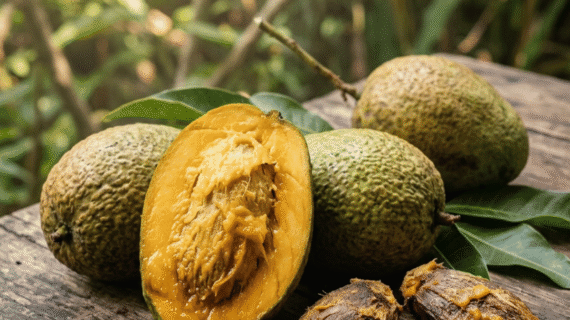
Mangifera foetida, commonly known as horse mango, bacang, bachang, or limus, is a large evergreen fruit tree in the family Anacardiaceae. Closely related to the cultivated mango (Mangifera indica), this species is native to Southeast Asia and is valued for its vigorous growth, distinctive aromatic fruit, and importance in regional breeding programs. Although less widely cultivated than common mango, M. foetida is highly regarded by collectors for its adaptability, disease resistance, and unique flavor profile, which ranges from pleasantly sweet-tart to resinous depending on the cultivar and stage of ripeness.
The tree develops a dense, symmetrical canopy with large, glossy leaves and can reach heights of 20–35 meters under favorable conditions. Its fruits are typically larger than those of many cultivated mangoes, featuring thick green to yellow-green skin and bright orange to deep yellow flesh. While some wild forms possess a strong resinous aroma, improved cultivars offer excellent eating quality and are consumed fresh or processed into juices, preserves, chutneys, and traditional dishes.
Native Habitat
Distribution
Mangifera foetida is indigenous to the humid tropical forests of Southeast Asia. Its natural range extends across the Malay Peninsula, Sumatra, Borneo, and surrounding regions, while cultivation has expanded throughout neighboring tropical countries.
Major cultivation areas include:
- Indonesia
- Malaysia
- Brunei
- Southern Thailand
- Singapore
- Philippines
- Papua New Guinea
Climate
Horse mango thrives in warm, humid tropical environments with abundant rainfall throughout the year.
| Environmental Factor | Preferred Condition |
|---|---|
| USDA Zones | 11–12 |
| Temperature | 24–34°C (75–93°F) |
| Annual Rainfall | 1,500–3,000 mm |
| Humidity | High |
| Dry Season | Beneficial but not essential |
Compared with many commercial mango cultivars, M. foetida tolerates high rainfall and humid conditions remarkably well, making it particularly suitable for equatorial climates.
Growth & Care
Proper Mangifera foetida care promotes vigorous growth, healthy canopies, and consistent fruit production.
Light
Plant trees in full sun, where they receive at least 6–8 hours of direct sunlight each day.
Adequate sunlight encourages strong branching, dense foliage, improved flowering, and enhanced fruit quality. Young seedlings tolerate light shade but should gradually acclimate to full sun as they mature.
Temperature
Ideal temperatures range between 24–34°C (75–93°F).
The species is highly adapted to tropical climates but remains sensitive to frost. Temperatures below approximately 5°C (41°F) may damage young growth, while prolonged freezing conditions can be fatal.
Soil
Horse mango performs best in deep, fertile, well-drained soils.
Ideal soil characteristics include:
- Sandy loam or loam
- High organic matter
- Good drainage
- Slightly acidic to neutral pH (5.5–7.0)
Although the species tolerates seasonal rainfall well, prolonged waterlogging should still be avoided to maintain healthy root systems.
Watering
Water young trees regularly during establishment to encourage deep root development.
Mature trees become moderately drought tolerant, although consistent irrigation during flowering and fruit enlargement improves fruit size, yield, and overall quality.
Avoid maintaining saturated soil for extended periods.
Fertilization
Apply balanced fertilizer throughout the growing season while adjusting nutrient ratios according to tree age.
Recommended nutrients include:
- Nitrogen for vegetative growth
- Phosphorus for root development
- Potassium for flowering, fruit quality, and disease resistance
- Calcium, magnesium, zinc, boron, and iron when required
Excessive nitrogen may stimulate vigorous shoot growth while delaying flowering.
Mulching
Apply a 5–10 cm layer of organic mulch beneath the canopy while keeping it away from the trunk.
Mulching helps:
- Preserve soil moisture
- Suppress weeds
- Moderate soil temperature
- Improve soil structure
- Increase organic matter over time
Pruning
Prune after harvest or during periods of active vegetative growth.
Remove:
- Dead or damaged branches
- Crossing limbs
- Dense interior growth
- Water shoots
Regular pruning improves air circulation, sunlight penetration, and harvest accessibility while encouraging the development of productive fruiting branches.
Propagation
Understanding Mangifera foetida propagation allows growers to preserve superior selections and establish vigorous orchards.
Seed Propagation
Fresh seeds germinate readily and produce vigorous seedlings. Unlike many cultivated mangoes, M. foetida commonly produces polyembryonic seeds, meaning multiple seedlings may emerge from a single seed. Most of these seedlings are nucellar and genetically identical to the mother tree, while one seedling may be sexually produced and genetically unique.
For successful germination:
- Remove the husk carefully.
- Extract the embryo.
- Sow immediately in a well-drained growing medium.
- Maintain temperatures between 25–30°C.
- Keep the medium consistently moist.
Fresh seeds usually germinate within 2–4 weeks.
Grafting
Superior cultivars and selected clones are commonly propagated by grafting to maintain consistent fruit quality.
Common methods include:
- Veneer grafting
- Side veneer grafting
- Cleft grafting
Step-by-Step Grafting Process
- Select a healthy seedling rootstock.
- Collect mature scion wood from a productive tree.
- Make matching cuts on the stock and scion.
- Align the cambium layers precisely.
- Secure the union firmly using grafting tape.
- Protect the graft from excessive sunlight and dehydration.
- Allow new shoots to develop before removing the wrapping.
- Remove any shoots emerging below the graft union.
Warm temperatures and active growth provide the highest graft success.
Grafted vs. Seed-Grown Plants
| Characteristic | Grafted Plants | Seed-Grown Plants |
|---|---|---|
| Fruiting Age | 3–5 years | 6–10 years |
| Growth Rate | Moderate | Vigorous |
| Fruit Quality | Consistent | Generally consistent in nucellar seedlings but variable in sexually produced seedlings |
| Genetic Uniformity | Excellent | Moderate to high (polyembryonic) |
| Commercial Value | Very high | Moderate |
| Best Use | Orchards, collectors | Rootstocks, breeding, conservation |
Grafted trees are recommended for growers seeking reliable fruit quality and earlier production. However, because M. foetida is typically polyembryonic, vigorous nucellar seedlings often closely resemble the parent tree and can produce satisfactory fruit, making seed propagation more practical than it is for many monoembryonic mangoes.
Fruiting
Healthy trees generally flower once annually, although flowering time varies according to local climate.
Flowering
Large terminal panicles bear hundreds of small yellowish-white flowers, with only a small percentage developing into mature fruit.
Pollination
Bees, flies, and other beneficial insects are the primary pollinators. Maintaining pollinator diversity enhances fruit set and productivity.
Fruit Development
Following successful pollination, fruits generally require 100–140 days to mature, depending on the cultivar and environmental conditions.
Consistent irrigation and balanced nutrition improve:
- Fruit size
- Flesh quality
- Sugar content
- Reduced premature fruit drop
Harvest Maturity
Harvest fruit when:
- The skin changes from dark green to yellow-green.
- The shoulders become full and rounded.
- The fruit develops its characteristic aroma.
- The flesh softens slightly while remaining firm enough for handling.
Many cultivars continue to ripen after harvest, developing improved sweetness and aroma over several days.
Factors Affecting Fruit Quality
Premium horse mango production depends on:
- Full sun exposure
- Fertile, well-drained soil
- Consistent irrigation during fruit development
- Balanced fertilization
- Proper pruning
- Effective pollination
- Timely harvesting
- Selection of superior cultivars
When cultivated under optimal conditions, Mangifera foetida produces abundant crops of large, aromatic fruit valued for their rich tropical flavor, excellent processing qualities, and importance in preserving Southeast Asia’s diverse mango heritage.
Need Further Cultivation Guidance?
Whether you need assistance with rare tropical plant care, future species reservations, grafted plant availability, or cultivation guidance for rare seeds and rare fruit plants, our team is always happy to assist fellow collectors.