Mangifera indica Growing Guide: Care, Propagation & Grafting
Introduction
Mangifera indica, commonly known as the mango, is one of the world’s most celebrated tropical fruit trees. Belonging to the family Anacardiaceae, it has been cultivated for thousands of years for its exceptional fruit quality, ornamental beauty, and economic importance. Today, hundreds of cultivars exist, ranging from compact home-garden selections to vigorous commercial varieties.
Native to the tropical regions of the Indian subcontinent and parts of Southeast Asia, Mangifera indica has spread throughout tropical and subtropical regions worldwide. It thrives in warm climates and serves as both a valuable fruit crop and an attractive landscape tree with dense evergreen foliage.
Collectors appreciate the species not only for its remarkable diversity of fruit characteristics but also for the opportunity to cultivate rare regional cultivars through grafting.
Native Habitat
Distribution
Mangifera indica naturally occurs in tropical monsoon forests and seasonally dry tropical regions. Although centuries of cultivation have obscured its exact native range, botanists generally recognize northeastern India, Bangladesh, and Myanmar as its center of origin.
Today, mango grows extensively across:
- India
- Thailand
- Indonesia
- Malaysia
- Philippines
- Vietnam
- Australia
- Central America
- South America
- Tropical Africa
Climate
Mango performs best in climates characterized by:
| Environmental Factor | Preferred Condition |
|---|---|
| USDA Zones | 10–12 |
| Temperature | 24–35°C (75–95°F) |
| Annual Rainfall | 750–2,500 mm |
| Humidity | Moderate to high |
| Dry Season | Beneficial before flowering |
Although mature trees tolerate brief drought periods, young plants require consistent moisture for healthy establishment.
Growth & Care
Understanding Mangifera indica care begins with replicating its natural growing conditions while maintaining excellent root health.
Light
Provide full sun for at least 6–8 hours daily.
Abundant sunlight promotes vigorous vegetative growth, stronger flowering, improved fruit coloration, and higher sugar accumulation. Conversely, excessive shade reduces flowering and encourages weak, elongated branches.
Temperature
Maintain temperatures between 24–35°C (75–95°F) whenever possible.
Young trees suffer damage below approximately 4°C (40°F), while prolonged frost may kill branches or entire plants. Therefore, growers in marginal climates often protect young specimens during winter.
Soil
Mango adapts to many soil types but performs best in:
- Deep, well-drained loam
- Sandy loam
- Slightly acidic to neutral soil (pH 5.5–7.5)
Avoid heavy clay soils with poor drainage because saturated roots become susceptible to fungal diseases and root decline.
Watering
Water deeply rather than frequently.
Young trees benefit from regular irrigation during establishment. Once mature, mango tolerates moderate drought remarkably well. Furthermore, slightly reducing irrigation before flowering often stimulates more abundant blooming.
Avoid continuously wet soil, as excessive moisture suppresses root respiration and encourages disease development.
Fertilization
Balanced nutrition supports vigorous growth and consistent fruit production.
A typical fertilization program includes:
- Nitrogen during vegetative growth
- Phosphorus for root development
- Potassium before flowering and fruiting
- Micronutrients such as zinc, boron, magnesium, and iron when deficiencies appear
Excessive nitrogen should be avoided because it promotes lush foliage at the expense of flowering.
Mulching
Apply a 5–10 cm layer of organic mulch around the drip line while keeping mulch several centimeters away from the trunk.
Mulching:
- Conserves soil moisture
- Moderates soil temperature
- Improves soil structure
- Suppresses weeds
- Gradually increases organic matter
Pruning
Prune immediately after harvest.
Focus on:
- Removing dead branches
- Improving air circulation
- Maintaining manageable tree height
- Encouraging balanced scaffold branches
Regular pruning also increases sunlight penetration, which improves flowering and fruit quality in subsequent seasons.
Propagation
Understanding Mangifera indica propagation allows growers to choose the most suitable planting method.
Seed Propagation
Growing mango from seed remains straightforward but produces genetically variable offspring.
Fresh seeds germinate readily when:
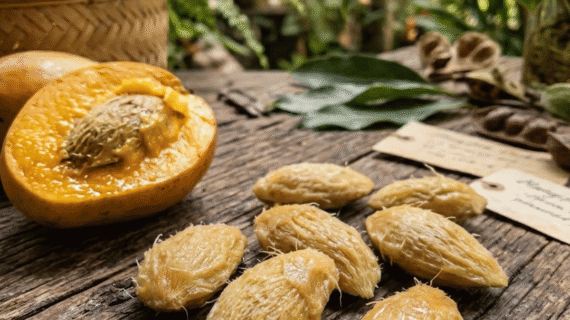
- Remove the husk carefully.
- Extract the embryo.
- Plant in sterile, well-drained media.
- Keep evenly moist.
- Maintain temperatures around 25–30°C.
- Germination usually occurs within 2–4 weeks.
Polyembryonic cultivars often produce seedlings nearly identical to the parent, whereas monoembryonic varieties generate genetically unique plants.
Grafting
Commercial nurseries almost exclusively propagate superior cultivars through grafting because it preserves desirable fruit characteristics.
Common grafting methods include:
- Veneer grafting
- Side grafting
- Cleft grafting
- Epicotyl grafting
Step-by-Step Grafting Process
- Select a vigorous seedling rootstock approximately pencil thickness.
- Collect healthy scion wood from a mature fruiting tree.
- Make matching cuts on both stock and scion.
- Join the cambium layers carefully.
- Secure tightly using grafting tape.
- Cover the graft to reduce moisture loss if necessary.
- Place the plant in bright shade until new growth appears.
- Remove wrapping once the graft has fully healed.
Successful grafting usually occurs during active growth when temperatures remain warm.
Grafted vs. Seed-Grown Plants
| Characteristic | Grafted Plants | Seed-Grown Plants |
|---|---|---|
| Fruiting Age | 2–4 years | 6–10+ years |
| Growth Rate | Moderate | Vigorous |
| Fruit Quality | Predictable | Highly variable |
| Genetic Uniformity | Excellent | Low |
| Commercial Value | Very high | Limited |
| Collector Interest | Named cultivars | Breeding and rootstocks |
Grafted trees suit homeowners, collectors, and commercial orchards seeking reliable fruit quality and earlier production.
Seed-grown plants remain valuable for breeding programs, rootstock production, and discovering new cultivars with unique characteristics.
Fruiting
Healthy mango trees typically flower once annually following a cooler or drier period.
Flowering
Large terminal panicles produce hundreds to thousands of tiny flowers. However, only a small percentage ultimately develop into mature fruit.
Pollination
Various insects, including bees, flies, and other beneficial pollinators, transfer pollen between flowers. Therefore, maintaining pollinator diversity improves fruit set.
Fruit Development
Following successful pollination, fruit generally requires 90–150 days to mature, depending on cultivar and climate.
Throughout development, consistent moisture and balanced nutrition promote:
- Better fruit size
- Improved sweetness
- Uniform coloration
- Reduced fruit drop
Harvest Maturity
Harvest timing depends on the cultivar but generally includes:
- Full shoulder development
- Slight skin color change
- Mature seed formation
- Characteristic aroma
Most commercial growers harvest slightly before full ripeness to improve storage and transport.
Factors Affecting Fruit Quality
Premium fruit quality depends on several interacting factors:
- Full sunlight exposure
- Proper irrigation management
- Balanced fertilization
- Adequate pollination
- Healthy foliage
- Disease prevention
- Timely harvesting
- Appropriate cultivar selection
When these conditions align, Mangifera indica consistently produces exceptionally flavorful fruit with excellent texture, aroma, and market value.
Need Further Cultivation Guidance?
Whether you need assistance with rare tropical plant care, future species reservations, grafted plant availability, or cultivation guidance for rare seeds and rare fruit plants, our team is always happy to assist fellow collectors.