Mangifera indica ‘Gedong Gincu’ Growing Guide: Care, Propagation & Fruiting
Introduction
Mangifera indica ‘Gedong Gincu’ is one of Indonesia’s most celebrated mango cultivars, renowned for its vibrant reddish-orange blush, rich floral aroma, and exceptionally sweet flavor. Originating from West Java, particularly the regions of Cirebon and Majalengka, this premium cultivar has become one of the country’s flagship export mangoes due to its attractive appearance, excellent eating quality, and reliable market demand.
Like all mangoes, ‘Gedong Gincu’ belongs to the family Anacardiaceae. The tree develops into a medium to large evergreen specimen with a rounded canopy of glossy, lanceolate leaves. While vigorous, it responds well to pruning, making it suitable for home gardens, intensive orchards, and premium fruit collections. The fruit is medium-sized with smooth yellow skin heavily overlaid by a distinctive crimson-red blush that intensifies under full sun exposure.
Native Habitat
Distribution
‘Gedong Gincu’ originated in West Java, Indonesia, where local growers selected and propagated it for its outstanding fruit quality. Today, it is cultivated throughout Indonesia and in several tropical countries interested in premium dessert mango production.
Commercial production is concentrated in:
- West Java
- Central Java
- East Java
- West Nusa Tenggara
- Bali
- Other tropical regions with similar climates
Climate
This cultivar thrives in tropical climates with a distinct dry season before flowering.
| Environmental Factor | Preferred Condition |
|---|---|
| USDA Zones | 10–12 |
| Temperature | 24–34°C (75–93°F) |
| Annual Rainfall | 1,000–2,500 mm |
| Humidity | Moderate to high |
| Dry Season | Essential for consistent flowering |
A pronounced dry period encourages abundant flower initiation, while excessive rainfall during flowering may reduce fruit set.
Growth & Care
Proper Mangifera indica ‘Gedong Gincu’ care ensures vigorous growth and premium fruit production.
Light
Plant in full sun, receiving at least 6–8 hours of direct sunlight daily.
High light intensity improves flowering, fruit coloration, sugar accumulation, and the characteristic red blush that distinguishes this cultivar.
Temperature
Ideal temperatures range between 24–34°C (75–93°F).
Young trees are sensitive to frost, while mature trees tolerate brief cool conditions but perform best in consistently warm environments.
Soil
Grow in fertile, well-drained soils with:
- Sandy loam or loam
- Deep rooting profile
- High organic matter
- pH 5.5–7.0
Poor drainage significantly increases the risk of root diseases and reduced vigor.
Watering
Provide regular irrigation during establishment and fruit development.
Reduce irrigation slightly before flowering to encourage bloom initiation. During fruit enlargement, maintain consistent moisture to improve fruit size and reduce premature fruit drop.
Avoid prolonged waterlogging.
Fertilization
Feed regularly using balanced fertilizers while adjusting nutrient ratios throughout the year.
Recommended nutrients include:
- Nitrogen for vegetative growth
- Phosphorus for root development
- Potassium for flowering, fruit sweetness, and skin coloration
- Calcium, magnesium, zinc, and boron as needed
Excessive nitrogen should be avoided because it delays flowering and promotes excessive vegetative growth.
Mulching
Apply a 5–10 cm layer of organic mulch beneath the canopy.
Mulching:
- Conserves soil moisture
- Improves soil fertility
- Moderates soil temperature
- Suppresses weeds
- Supports beneficial soil microorganisms
Keep mulch several centimeters away from the trunk.
Pruning
Prune immediately after harvest.
Focus on:
- Removing dead or damaged branches
- Opening the canopy
- Controlling tree height
- Encouraging new fruiting shoots
A well-managed canopy improves sunlight penetration, resulting in better fruit color and higher-quality harvests.
Propagation
Because cultivar characteristics cannot be reliably reproduced from seed, Mangifera indica ‘Gedong Gincu’ propagation relies primarily on grafting.
Seed Propagation
Seeds germinate readily but produce genetically variable offspring that rarely match the parent tree in fruit quality.
For germination:
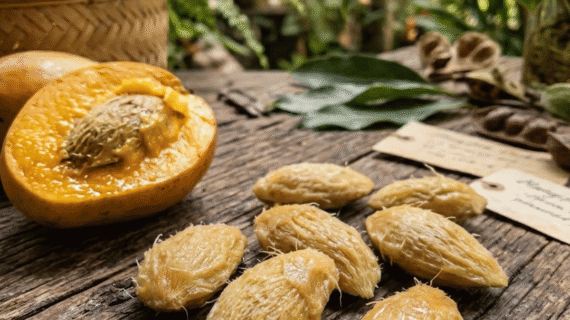
- Remove the husk carefully.
- Extract the embryo.
- Sow immediately in a well-drained growing medium.
- Maintain temperatures between 25–30°C.
- Keep the medium consistently moist.
Fresh seeds typically germinate within 2–4 weeks.
Seedlings are commonly used as rootstocks rather than for fruit production.
Grafting
Grafting is the standard propagation method for commercial orchards and collectors because it preserves the cultivar’s desirable characteristics.
Common methods include:
- Veneer grafting
- Side veneer grafting
- Cleft grafting
Step-by-Step Grafting Process
- Select a healthy seedling rootstock approximately pencil thickness.
- Collect mature scion wood from a productive ‘Gedong Gincu’ tree.
- Make matching cuts on the stock and scion.
- Align the cambium layers carefully.
- Secure the graft tightly with grafting tape.
- Protect the graft from drying and direct sunlight.
- Wait for new shoots to emerge.
- Remove wrapping after the graft has healed and eliminate any shoots below the graft union.
Warm temperatures and active growth significantly improve graft success.
Grafted vs. Seed-Grown Plants
| Characteristic | Grafted Plants | Seed-Grown Plants |
|---|---|---|
| Fruiting Age | 2–4 years | 6–10+ years |
| Growth Rate | Moderate | Vigorous |
| Fruit Quality | Identical to the parent cultivar | Highly variable |
| Genetic Uniformity | Excellent | Low |
| Commercial Value | Very high | Limited |
| Best Use | Orchards, collectors | Rootstocks, breeding |
Grafted plants are strongly recommended for anyone seeking authentic ‘Gedong Gincu’ fruit. Seed-grown trees are primarily valuable as rootstocks or for breeding new cultivars.
Fruiting
Under favorable tropical conditions, ‘Gedong Gincu’ flowers once each year, typically following a distinct dry season.
Flowering
Large terminal panicles produce hundreds of small yellowish flowers, although only a small proportion develops into mature fruit.
Pollination
Bees, flies, and other beneficial insects are the primary pollinators. Maintaining a healthy pollinator population improves fruit set and overall productivity.
Fruit Development
Fruit generally matures within 100–130 days after successful pollination, depending on local climate and orchard management.
Consistent irrigation, balanced potassium nutrition, and adequate sunlight contribute to:
- Uniform fruit size
- High sugar content
- Strong floral aroma
- Intense red blush
- Reduced fruit drop
Harvest Maturity
Harvest when:
- The skin turns golden yellow with a bright crimson-red blush.
- The shoulders become full and rounded.
- The fruit develops its characteristic fragrance.
- The flesh reaches peak sweetness while remaining firm enough for handling.
Harvesting at physiological maturity ensures excellent flavor while maintaining good postharvest quality for transport.
Factors Affecting Fruit Quality
Premium ‘Gedong Gincu’ mangoes depend on:
- Full sun exposure
- A distinct dry season before flowering
- Well-drained fertile soil
- Balanced fertilization
- Consistent irrigation during fruit development
- Proper canopy management
- Effective pollination
- Timely harvesting
When grown under optimal conditions, Mangifera indica ‘Gedong Gincu’ consistently produces beautifully colored fruit with exceptional sweetness, rich floral aroma, smooth fiberless flesh, and excellent market value, making it one of Indonesia’s finest mango cultivars.
Need Further Cultivation Guidance?
Whether you need assistance with rare tropical plant care, future species reservations, grafted plant availability, or cultivation guidance for rare seeds and rare fruit plants, our team is always happy to assist fellow collectors.